
Prediction Market vs Sports Betting
13 June 2026
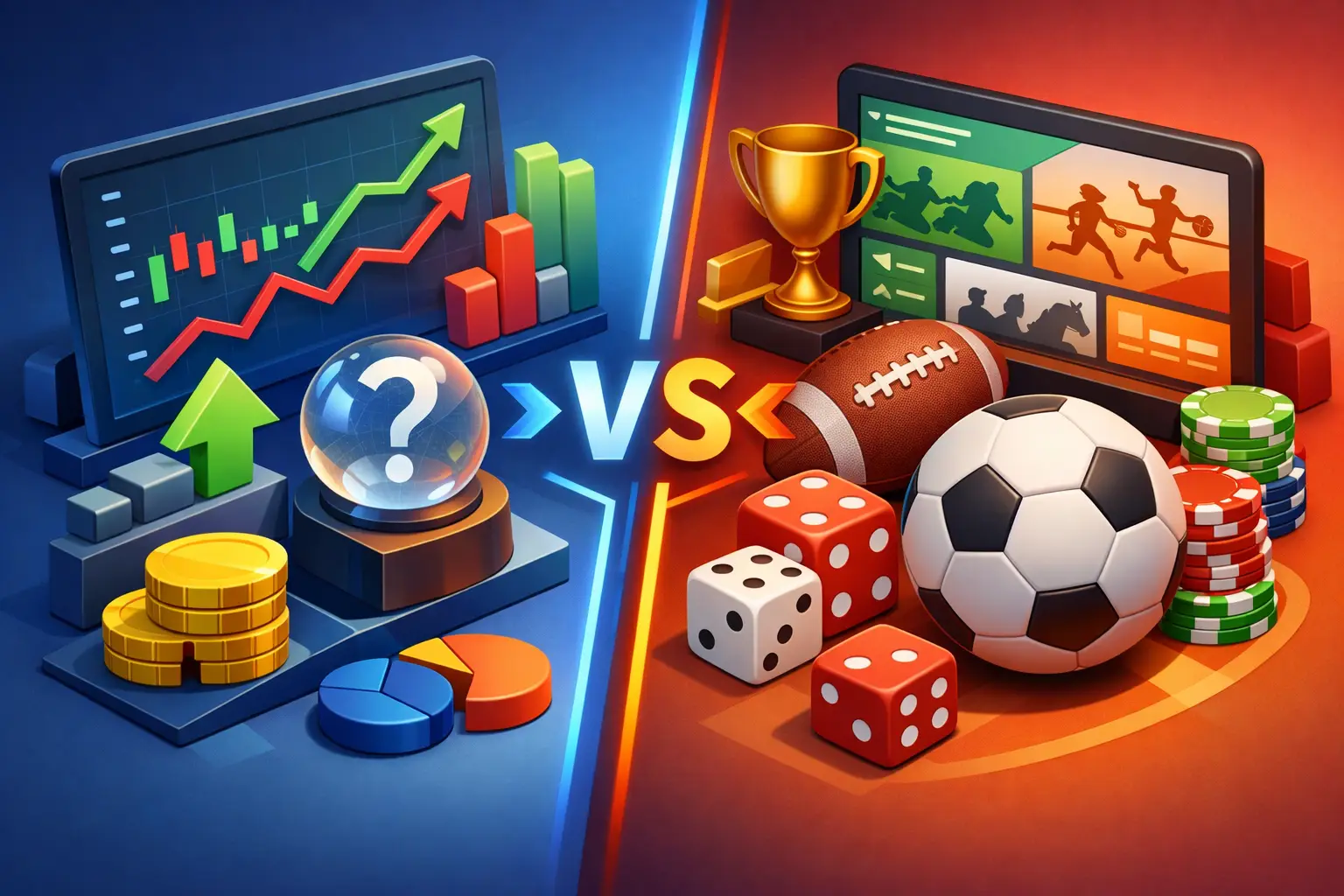
A lot of people first compare these two formats when they realise they enjoy making calls on what happens next, but do not necessarily want the same old sportsbook experience. That is where the prediction market vs sports betting question gets interesting. On the surface, both involve taking a position on an outcome and getting paid if you are right. In practice, they reward different habits, attract different mindsets, and create very different user experiences.
If you care about using information well, not just chasing action, the distinction matters. One model is built around fixed sporting events and bookmaker pricing. The other can feel closer to a live marketplace for opinions, probability and edge. That shift changes how you think, how you manage risk, and even what kind of reputation you build over time.
Prediction market vs sports betting: the core difference
Sports betting is familiar. A bookmaker offers odds on a match or event, you place a wager, and the result determines whether you win or lose. The operator sets the market, controls the margin, and frames the experience around betting lines.
A prediction market is broader and often more strategic. Instead of only focusing on sport, it lets users forecast outcomes across a wide range of topics, from entertainment and politics to technology and major world events. The appeal is not just backing a team. It is expressing a view on what is likely to happen and being rewarded for being right.
That difference sounds subtle, but it changes the entire feel of the product. Sports betting is usually event-led. Prediction markets are thesis-led. In one, you react to the fixture list. In the other, you look for insight wherever it exists.
What you are really backing
In sports betting, you are usually backing a side, a scoreline, a player stat or an in-play moment. The structure is tightly tied to the sport itself. That can be exciting, especially if you already follow football, tennis or racing closely.
In a prediction market, you are backing a forecast. The market might still be tied to sport, but it can just as easily centre on whether a company will hit a milestone, whether an artist will top the charts, or whether a public event will unfold a certain way. The focus is on your judgement.
That makes prediction feel more like a test of pattern recognition. You are not limited to one domain. If your edge comes from understanding culture, tech, media cycles or sentiment shifts, a prediction market can give you more room to act on it.
How pricing shapes the experience
One of the biggest practical differences in the prediction market vs sports betting debate is pricing.
Traditional sports betting uses bookmaker odds. Those odds are not just a neutral reflection of probability. They include the bookmaker's margin, and they are designed to manage risk for the house. Sometimes the price is strong. Often, it is not. If you have ever felt that the line looks just a little worse than it should, you are probably noticing that built-in edge.
Prediction markets tend to feel more transparent because the entire product is built around the probability of an outcome. Rather than presenting a glossy list of boosted bets and specials, they put the forecast itself at the centre. That often makes it easier for users to think in terms of likelihood, expected value and whether the market is overreacting.
This does not mean prediction markets are automatically simpler. They still require judgement. But the framing is cleaner. You are not decoding layers of betting product design before you even reach the actual question.
Skill, research and the quality of your edge
Sports betting often markets itself as a game of expertise, and sometimes it is. If you know a league inside out, track injuries properly and understand tactics better than the average punter, you may spot value.
But a lot of sportsbook activity is built for volume, speed and impulse. Accumulators, flashy promos and constant in-play prompts can pull users towards entertainment-first behaviour rather than disciplined decision-making.
Prediction markets usually reward a slightly different posture. The best users are not always the loudest fans. They are the ones who can gather signals, weigh probabilities and stay rational when everyone else is reacting emotionally. It is less about tribal loyalty and more about decision quality.
That is why prediction markets appeal to people who think competitively about information. They suit users who like asking, what is the market missing, where is consensus weak, and what does the evidence actually say?
Regulation and trust matter more than most people admit
A major reason people start looking beyond conventional betting products is trust. They want to know the platform is legitimate, payment methods are familiar, and the rules are not being written on the fly.
In the UK especially, regulation is not a side note. It is part of the product. A licensed, compliant platform with visible responsible-use tools gives users a very different level of confidence from grey-area operators or crypto-first exchanges that expect people to navigate wallets, volatile tokens and unclear protections.
This is one area where the category you choose really matters. Sports betting is established and regulated, but it can still feel built around old habits. Some newer prediction products try to offer a sharper, more modern experience while keeping compliance and safeguards intact. That balance matters if you want the upside of forecasting without the friction or opacity that turns people off.
Prediction market vs sports betting on market variety
If your interest begins and ends with Saturday's fixtures, sports betting will always have a natural appeal. It is built for that rhythm. Team sheets drop, odds move, and the action starts.
But many users are not only interested in sport. They follow earnings calls, viral moments, product launches, elections, streaming hits and public narratives that shift by the hour. A prediction market is better suited to that broader attention span because it turns more of the world into something you can analyse.
That variety does two useful things. First, it gives you more chances to act where your knowledge is strongest. Second, it reduces the pressure to force a position on a sporting event just because it is there. If there is no edge in tonight's match, you can simply look elsewhere.
For a generation raised on finance apps, social feeds and constant information flow, that feels natural. Your intelligence is not limited to one scoreboard.
The social side is different too
Sports betting is often private. You place your bet, maybe share a screenshot with mates, and move on. There is not always much structure around long-term performance or visible proof of judgement.
Prediction markets can create a more public sense of reputation. When performance, consistency and decision quality are easier to track, being right becomes part of your identity. That changes the emotional reward. It is not only about a payout. It is about building a record.
That is a strong fit for users who want more than anonymous staking. They want to be recognised for making sharp calls. Features like badges, rankings and learning tools can turn prediction into a competitive discipline rather than just another punt.
Which one is better for beginners?
It depends on what kind of beginner you are.
If you already understand sports and simply want a familiar format, sports betting may feel easier at first. The mechanics are straightforward, the events are known, and the language is mainstream.
If you are comfortable thinking in probabilities, following news and comparing narratives, a prediction market may actually feel more intuitive. The question is clearer, and the value of your own judgement is more obvious. You do not need to become an odds specialist to get started.
A modern platform also makes a big difference here. If the experience is regulated, easy to fund, free of crypto dependency and supported by education, prediction markets become far more accessible to mainstream users. That is part of why platforms like Versus resonate. They frame forecasting as something intelligent, competitive and culturally relevant rather than niche or intimidating.
The real trade-off
The strongest case for sports betting is familiarity. It is fast, established and closely tied to live sport. For many people, that is enough.
The strongest case for prediction markets is range, clarity and a more skill-framed experience. They let you think beyond fixtures, act on broader knowledge, and engage with outcomes in a way that feels closer to informed judgement than routine gambling.
That does not mean every prediction market user is automatically more strategic, or that every sports bettor is acting on impulse. Plenty of disciplined bettors exist, and plenty of prediction users still make weak calls. The difference is in what the product encourages.
If the interface pushes hype, speed and house-first pricing, behaviour usually follows. If it rewards analysis, visible performance and smarter participation, behaviour tends to improve there too.
The better question, then, is not simply which format pays. It is which format fits the way you think.
If you want to turn instinct into something measurable, prediction has a strong edge. It gives your judgement more places to win, more ways to improve, and more chance to stand out. Being right is always satisfying. Being known for it is even better.
Predict the world’s next moves.
enter versus™