
How AI Improves Forecasting Without Replacing You
18 July 2026
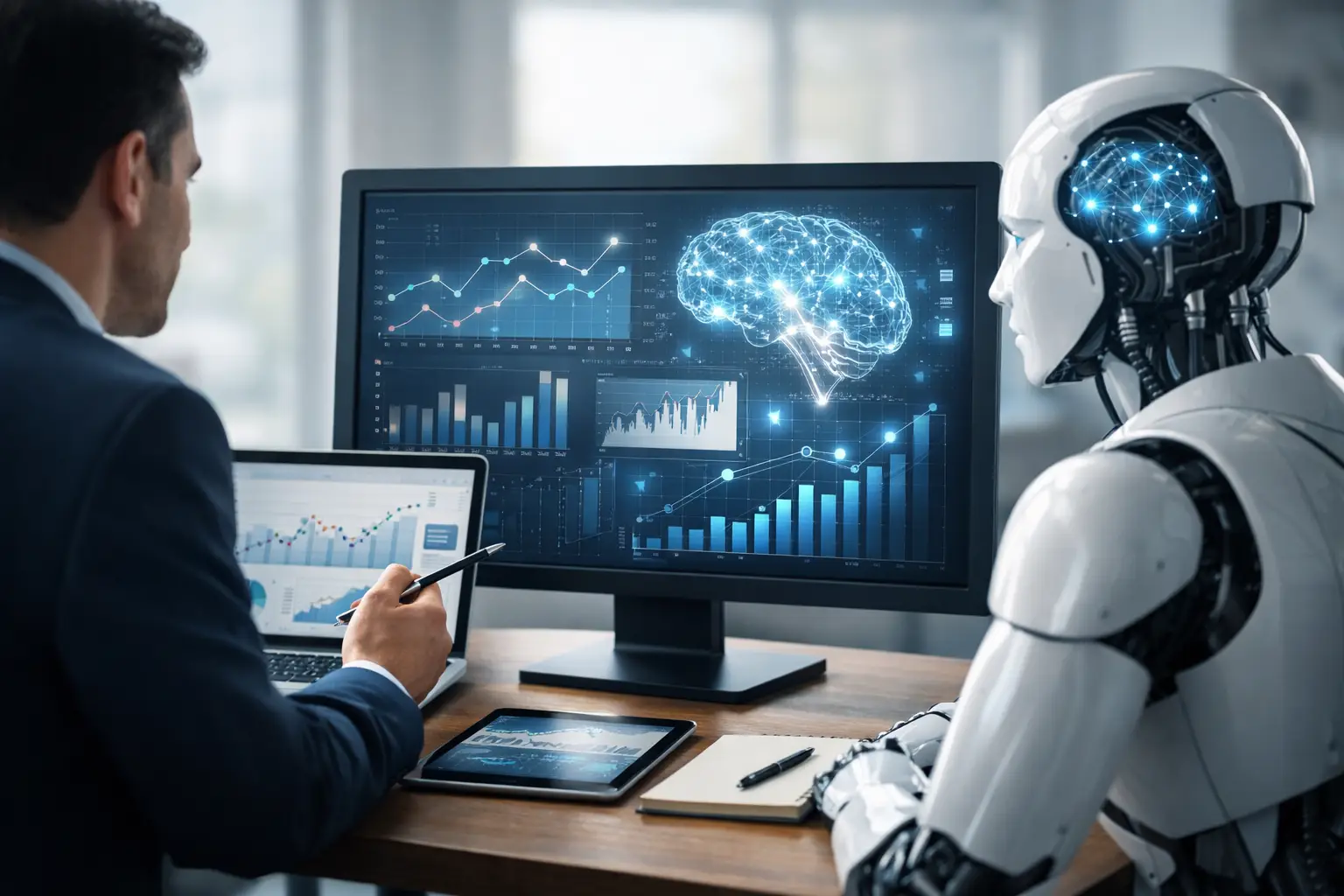
A headline breaks. A product launch stumbles. Inflation surprises the market. Most people react to the noise after the fact. The advantage comes from separating the signal before everyone else sees it. That is how AI improves forecasting: not by producing a magic answer, but by helping people process evidence, challenge weak assumptions and make sharper probability calls.
For anyone taking a position on what happens next, speed matters. So does judgement. AI can handle the scale. You supply the context, scepticism and conviction. Get that balance right and forecasting becomes less about loud opinions and more about building a repeatable edge.
How AI improves forecasting at the signal level
Forecasting has always involved incomplete information. The question is never whether you know everything. It is whether you have identified the facts that genuinely change the odds.
AI is particularly useful because it can examine large, messy pools of information far faster than a person can. It can scan reporting, earnings releases, historic results, search trends, social conversation and structured datasets, then surface relationships that deserve attention. A human analyst may notice that interest in a new phone is rising. An AI system can compare that interest with past launches, competitor activity, regional demand and the timing of media coverage.
That does not make the output a prediction you should follow blindly. It gives you a better starting point. Instead of spending hours gathering every relevant data point, you can spend your time asking the harder questions: Is this trend real? Is there another explanation? Has the market already priced it in?
The real gain is attention. AI helps direct it towards the variables that may move an outcome.
It finds patterns people miss
Humans are excellent at interpreting stories. We are less reliable at tracking hundreds of small changes at once, especially when the evidence is spread across different formats. A forecast can be influenced by seasonality, timing, sentiment, pricing, public behaviour and events that look unrelated in isolation.
Machine-learning models can test these inputs against past outcomes. They may identify that a certain combination of signals has historically mattered more than any single headline. For example, a forecast about a technology company might improve when product-review sentiment, delivery estimates and competitor announcements are considered together rather than separately.
The key word is might. Patterns can disappear when circumstances change. A model trained on stable conditions can misread a sudden regulatory shift, a cultural moment or a once-in-a-decade shock. That is why pattern recognition should sharpen your research, not end it.
It turns a vague view into a probability
“Feels likely” is not a forecast. A useful forecast puts a number on uncertainty.
AI can help convert a collection of signals into estimated probabilities. It can compare different scenarios, show which assumptions drive the result and update the estimate when new evidence arrives. This matters because a 55% chance and an 80% chance call for very different levels of confidence, even if both sound positive in conversation.
Better forecasting is often about calibration. If you regularly call events with 70% confidence, roughly seven in ten of those calls should land over time. AI can help assess whether your confidence has been earned by the data or inflated by a compelling narrative.
That discipline is powerful in prediction markets. The goal is not to be certain. It is to identify when the available odds appear to understate or overstate the true probability, then take a considered position.
AI makes forecasting faster, not infallible
The most useful AI systems do more than issue a score. They make the route to that score easier to inspect.
A good workflow begins with a clear question. What exactly is being forecast? What counts as a confirmed outcome? What is the deadline? Vague questions produce vague analysis, regardless of how advanced the technology is.
Next comes evidence. AI can organise a large volume of information and highlight what has changed since the last assessment. This is especially valuable in fast-moving markets, where an old view can become stale before you have finished reading the latest commentary.
Then comes stress-testing. Ask the model to make the strongest case against your position. Ask what evidence would reduce the probability most. Ask which inputs are assumptions rather than facts. This is where AI becomes a serious thinking tool rather than a confirmation machine.
Finally, review the result after the outcome is known. Were you wrong because the model missed a signal, because your interpretation was off, or because an unlikely event happened? Over time, that feedback loop improves judgement. Being right is great. Learning why you were right is how you build a reputation for it.
Where human judgement still wins
AI works from data, patterns and instructions. It does not have lived experience, personal accountability or a natural understanding of what matters culturally unless those things are made visible in the evidence.
Consider a pop-culture forecast. A model may see engagement figures and historic release performance, but it can struggle with the difference between genuine excitement and ironic attention. It may detect a surge in mentions without knowing that the conversation has turned negative. In politics, business and entertainment, context can change the meaning of the same data point completely.
Humans also make better calls on incentives. Who benefits from this announcement? Is a company managing expectations? Is a public figure creating attention? Is a supposedly independent source repeating the same original claim? These questions are central to forecasting, and they require active judgement.
There is another reason to keep people in charge: responsibility. A forecast can influence a decision, a position or a public opinion. You should be able to explain why you made your call. “The algorithm said so” is not analysis.
The strongest approach is human-led and AI-assisted. Use the machine to expand your field of view. Use your own reasoning to decide what deserves weight.
The trade-offs behind better AI forecasts
More data is not automatically better data. Poor-quality sources, duplicated reports and biased historical records can produce an impressively detailed but misleading output. If the inputs are weak, the confidence score may simply give weak thinking a cleaner interface.
There is also a risk of false precision. A forecast of 63.4% looks authoritative, but the decimal point does not mean the future is that exact. Treat numerical output as an estimate with a margin for uncertainty, particularly when the event is rare or the data is thin.
Privacy and provenance matter too. Know where information comes from, how recently it was collected and whether it is permitted to be used. In regulated environments, transparency is not a nice extra. It is part of making informed, responsible decisions.
Finally, beware of consensus loops. If everyone uses similar tools trained on similar public data, they may all reach the same conclusion. That can make markets more efficient, but it can also create crowded views. Your edge may come from a better question, a neglected source or a clearer interpretation of the same evidence.
Build a smarter forecasting habit
Start with a base rate. Before looking at the latest buzz, ask what usually happens in comparable situations. Base rates protect you from treating every new event as unprecedented.
Then define what would change your mind. Set the evidence threshold before you become emotionally attached to a view. If a forecast depends on one product announcement, one poll or one rumour, write down how you will respond if that signal fails.
Keep a record of your calls, your probabilities and your reasoning. This is where a platform such as Versus can make prediction more than a passing take: every informed position becomes a chance to measure your judgement in public. The point is not to chase every market. It is to learn where your knowledge, research and instincts are genuinely strongest.
Use AI to generate competing scenarios, not just a preferred answer. If the evidence supports a range rather than a single outcome, respect the range. Forecasting rewards people who can think in probabilities while everyone else insists on certainty.
Your next advantage will not come from asking AI to tell you the future. It will come from using it to see the present more clearly, challenge your first instinct and make your next call with better reasons behind it.
Predict the world’s next moves.
enter versus™