
AI Tools for Prediction Markets That Matter
18 June 2026
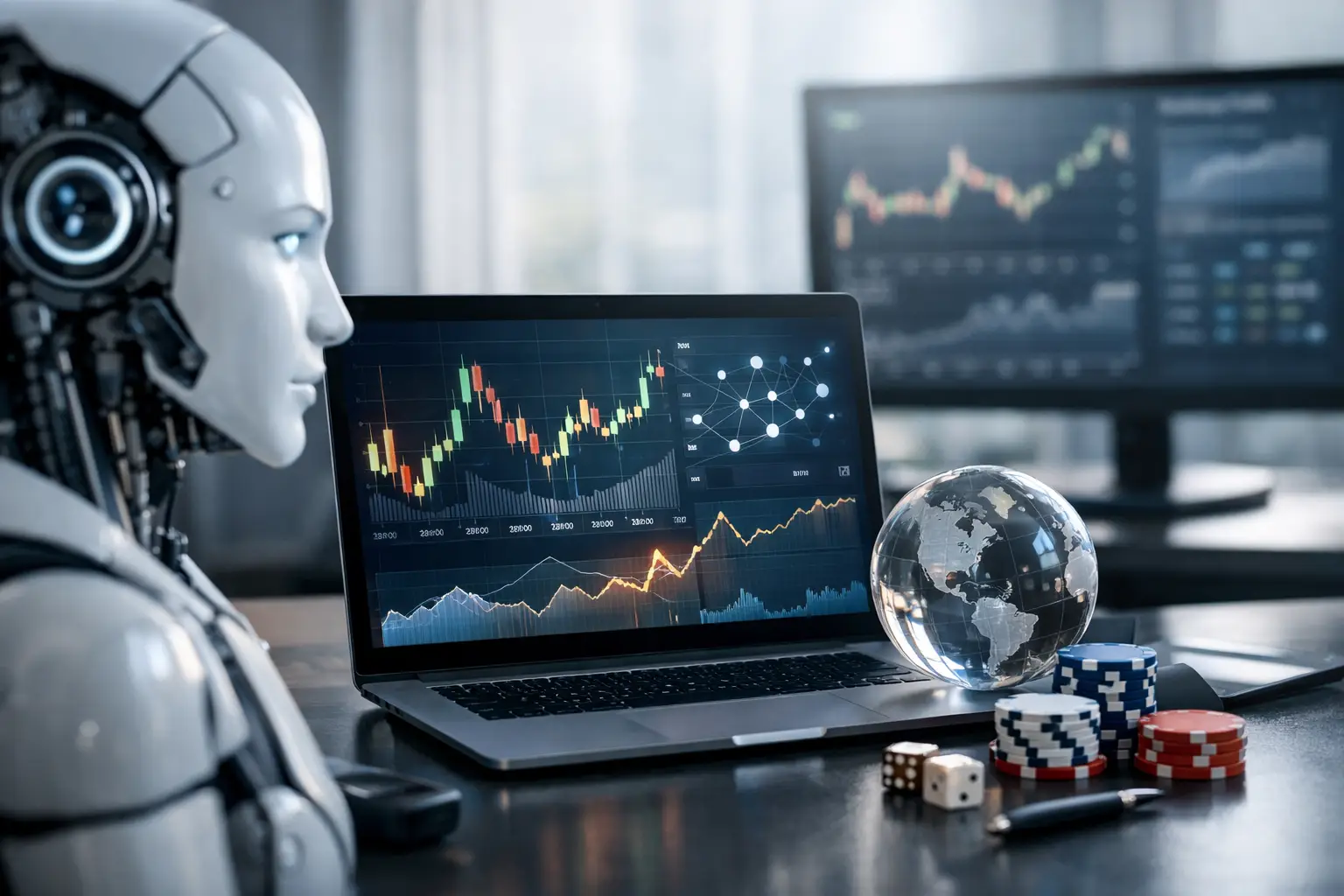
Most bad predictions do not fail because people lack opinions. They fail because people overweight noise, chase headlines and mistake confidence for edge. That is exactly where AI tools for prediction markets start to matter. Used well, they help you cut through clutter, compare scenarios faster and take positions with more discipline. Used badly, they simply automate overconfidence.
That distinction matters more than the tech itself. Prediction markets reward judgement under uncertainty, not just speed. The best forecasters are rarely the loudest people in the room. They are the ones who can process messy information, spot when consensus is wrong and stay calm when the market moves against them. AI can strengthen that process, but it cannot replace it.
What AI tools for prediction markets actually do
There is a lot of hype around AI in forecasting, and most of it is too vague to be useful. In practice, AI tools for prediction markets tend to do four jobs. They gather information, structure it, detect patterns and help you stress-test a view before you commit.
The first job is research compression. News breaks fast, social feeds move faster and every market sits inside a wider story. AI can summarise earnings calls, policy announcements, creator trends, sports form, public polling or sentiment spikes in minutes rather than hours. That does not mean the summary is always right. It means you get to the live question sooner.
The second job is comparison. Markets are full of relative signals. If an AI tool can line up historical analogues, prior market reactions or shifts in implied probability, it gives you a frame for judging whether today is unusual or just loud. Context is where edge starts.
The third job is scenario building. Good forecasting is not about one bold call. It is about mapping outcomes, assigning plausible probabilities and knowing what would change your mind. AI is useful here because it can generate alternative cases quickly, including ones you may not have considered.
The fourth job is discipline. A decent tool can force cleaner thinking by turning vague instincts into explicit assumptions. If your position depends on three events happening in sequence, you should know that before you risk money on it.
Where AI gives you an edge and where it does not
The strongest case for AI is not that it predicts the future. It is that it sharpens your process. That may sound less glamorous, but process is what separates repeatable performance from lucky runs.
AI is especially helpful in markets driven by large amounts of public information. Think elections, macro events, technology launches, entertainment cycles or recurring sports narratives. In those spaces, the challenge is not data scarcity. It is filtering. A strong tool can pull signal out of excess.
It is less useful when the real edge comes from context that is hard to model. A niche cultural shift, a late injury rumour, a legal wrinkle in a regulatory decision or the credibility of a source can all move a market before structured systems catch up. Human judgement still wins when the information is subtle, local or socially coded.
There is another limit that matters. AI often sounds more certain than it is. Clean language can hide weak assumptions. If a tool gives you a beautifully written answer based on stale data or a flawed prompt, the polish can be dangerous. A persuasive wrong answer is worse than an obvious gap in knowledge.
The main types of tools worth using
Not every tool labelled AI deserves your attention. For prediction markets, the most useful categories are narrower than the marketing suggests.
Research assistants are the obvious starting point. These tools summarise articles, transcripts and data releases, then help you pull out the variables that matter. The benefit is speed. The risk is flattening nuance. If a market hinges on one sentence in a policy speech, a summary may miss the point entirely.
Sentiment and trend analysis tools can also help, especially in entertainment, politics and consumer technology. They track how attention moves across platforms and whether mood is strengthening or fading. That matters because markets often react not just to facts, but to the pace at which narratives spread. Still, sentiment is not the same as truth. A noisy online reaction can create temporary dislocation, but hype does not always convert into outcomes.
Data modelling tools are more specialised and often more useful for experienced users. They can turn event histories, polling changes, price movements or performance metrics into rough probability ranges. The key word is rough. Models are useful when they stay humble. Once they pretend to capture every variable, they become expensive ways to confirm bias.
Then there are personal decision tools - prompt-based systems, note organisers and AI workflows that sit around your own research process. These are underrated. Often the real value is not one magic prediction engine. It is a setup that helps you track assumptions, review missed calls and keep your thinking consistent over time.
How sharper users actually apply AI
The strongest forecasters do not ask AI, “What will happen?” They ask better questions.
They use it to identify what the market may be underpricing. They ask which variables have changed in the last week, what similar events looked like historically, which assumptions are doing the most work in the current consensus and what evidence would invalidate the base case. That is a very different mindset from asking for a hot tip.
They also use AI before and after taking a position. Before entry, it can help frame the trade. After entry, it can help monitor whether the thesis is improving or breaking. That matters because many losses come from stubbornness rather than bad initial reads.
A practical workflow might look simple. Start with a market you understand. Use AI to summarise the latest developments, then ask for the key arguments on both sides. Pull out the variables that would most likely move the probability. Compare that with current pricing. If there is a gap between your read and the market, decide what evidence would prove you wrong. That last part is where discipline becomes visible.
This is also where a platform can make a real difference. On regulated products built for mainstream users rather than crypto natives, AI support works best when it helps people think clearly instead of pushing them into reckless activity. That balance matters. Versus, for example, positions AI as decision support inside a wider experience built around transparency, education and accountable participation. That is a stronger fit for serious users than systems built purely to maximise churn.
The mistakes that wipe out the advantage
There are three common errors, and they all look smart right up until they cost money.
The first is outsourcing judgement. If you let a tool make the call for you, you stop learning. Prediction markets are competitive by nature. Edge comes from refining your own model of how events unfold. AI should improve that model, not replace it.
The second is confusing data volume with insight. More inputs do not always mean better predictions. Often they just create false confidence. A smaller set of relevant variables usually beats a sprawling pile of weak correlations.
The third is ignoring market mechanics. Even if your underlying view is solid, timing and pricing still matter. An AI tool may tell you an event is likely, but if the market has already priced that likelihood efficiently, there may be no value left. Being right is not enough. You need to be more right than the price.
Choosing AI tools for prediction markets without getting distracted
If you are picking tools, focus less on flashy features and more on whether they improve your decisions. The right setup should help you research faster, think in probabilities, track your reasoning and spot when emotion is taking over.
You do not need a stack of ten products. For most users, one strong research assistant, one source of live data context and one way to log assumptions is plenty. If a tool cannot show you where its information comes from, treat it cautiously. If it cannot handle uncertainty without sounding absolute, treat it even more cautiously.
It also helps to choose tools that fit the kind of markets you play. Pop culture and politics reward fast narrative analysis. Financial and macro questions often need stronger quantitative framing. Sports-adjacent event forecasting may lean more on timing, injuries, sentiment and micro news. The point is not to find the best AI in the abstract. It is to find the best fit for your edge.
Prediction is part analysis, part temperament. AI can raise your level, but only if you use it to become more precise, more sceptical and more honest about what you do not know. The smartest move is not chasing perfect certainty. It is building a process that helps you be right more often, and wrong with control when the future has other ideas.
Predict the world’s next moves.
enter versus™